If you have spent more than a minute in creative leadership, you have probably been in a meeting like this.
Your team is working on a creative campaign, and everyone brings a different idea to the table. The longer you discuss the ideas, the more dug in everyone becomes. Someone's idea is going to win. That means someone else's has to lose.
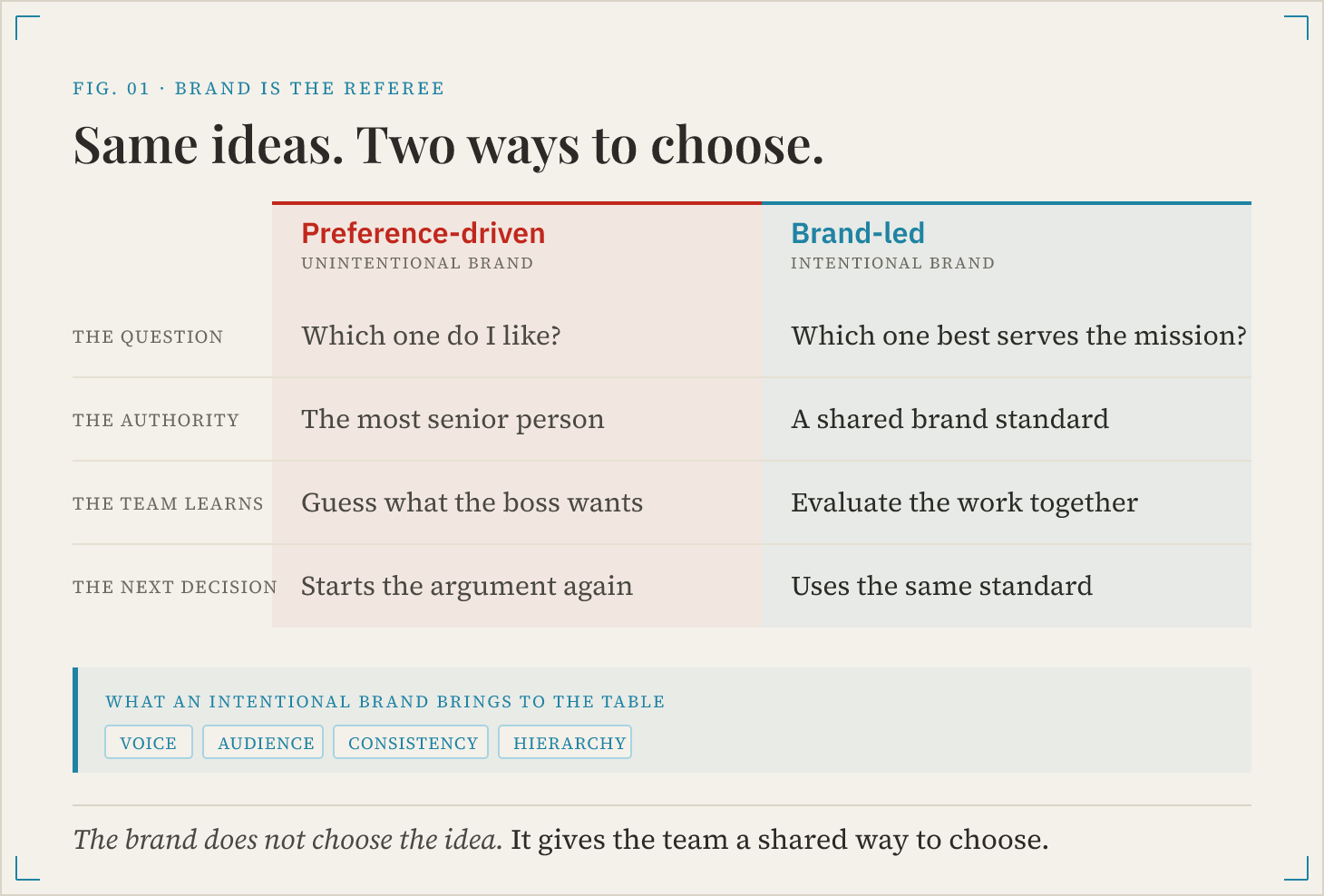
The conversation circles. Nobody budges. Eventually, the most senior person in the room settles it (mostly by being the most senior person in the room). The design ships, and everyone heads back to their desks a little quieter than before.
We’ve been there. Maybe we pulled rank. Maybe we got overruled and never understood why. Either way, the problem in that room wasn't that people had opinions. Opinions are fine. The problem was that the opinions had nowhere to go. Without a shared standard on the table, the decision gets settled by rank, by volume, or by whoever is willing to keep arguing the longest. None of that tells you whether the work is any good.
The cost is higher than an awkward twenty minutes. Your sharpest people learn that the brief is optional and the real assignment is guessing what the boss wants, so they stop bringing their best ideas and start bringing safe ones. The work slowly bends toward whatever the most powerful person happens to like, which is rarely the same thing your church is actually trying to say. (That word, prefer, is more expensive than it looks. I added up the invoice in The Most Expensive Word in Church Communications.)
Most people talk about brand like it's the latest fashion your church wears in public. The logo, color palette, and fonts are the parts everyone sees.
They may also be the least useful parts of your brand. The most important thing your brand does is end arguments.
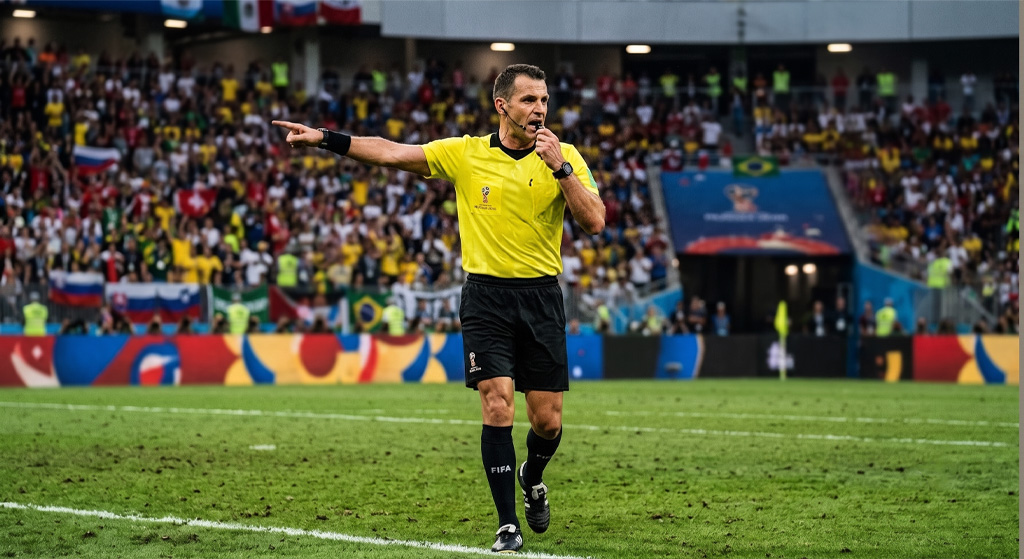
Your brand is the referee.
When you have a solid, intentional brand, you already have clarity about voice, look, direction, and audience. Your brand settles disputes before they become contests of rank or volume. Without a strong brand, creative decisions get made by seniority (whatever the boss likes). With a defined brand, you decide by asking which option is more on mission.
When your team looks at the options through the same lens, you can usually reach the same answer.
Rules make the game playable
Players may disagree with a referee's call, but they still expect the same rules to apply to everyone. Without that shared standard, the game stops being a game.
The same is true for your team. When the standard is written down (this is our voice, this is who we are called to serve, this is what matters most), your team can move quickly because they know where the lines are. When the standard lives in one person's head, every decision has to come back to that person.
What the referee rules on
- Voice: Would we say it this way?
- Audience: Is this for the people we're called to reach, or for us?
- Consistency: Does this feel like it came from the same church as everything else we make?
- Hierarchy: Is the most important thing the most visible thing?
Notice what's not on the list: whether anyone in the meeting personally likes it. Preference is allowed in the room. It just doesn't get to make the call.
Leaders benefit most
Here's the counterintuitive part: as the senior leader, you gain the most from a strong referee. Without one, every piece of creative work lands on your desk as a matter of your personal taste, and you become the bottleneck and the tyrant at once (even if you're gentle about it).
With an intentional brand, you set the standard once, and it scales with the work. That's not giving up control. That's what control looks like when it grows up.